Fifth Circuit dismisses cross-appeal challenging an opinion, not a judgment

wisdom_courthouse_0
“Appellate courts review judgments, not opinions.”

Federal Rule of Appellate Procedure 3(c)(1) commands that a notice of appeal “designate the judgment, order, or part thereof being appealed . . . .” That list conspicuously does not include “opinion.” The Fifth Circuit recently dismissed a cross-appeal that illustrates what can—and cannot—be appealed.

Nautilus, Inc., sued ICON Health & Fitness, Inc., for payments under a patent licensing agreement. The district court granted summary judgment for Nautilus and ICON appealed. But Nautilus also filed a notice of appeal “to the extent the [c]ourt determined that it must conduct an infringement analysis under Chinese Patent Law . . . .” ICON moved to dismiss Nautilus’s cross-appeal and the Fifth Circuit granted ICON’s motion.

The Fifth Circuit’s analysis starts by noting that “[a]ppellate courts review judgments, not opinions.” So a cross-appeal like Nautilus’s is the proper way to “seek modification of a judgment.” But “a cross-appeal is generally ‘not proper to challenge a subsidiary finding or conclusion when the ultimate judgment is favorable to the party cross-appealing.”

Nautilus had filed a notice of appeal that did not challenge the judgment in Nautilus’s favor. “Rather, Nautilus opposes the portion of the district court’s reasoning . .  that its analysis of whether Nautilus was due any royalties under the patent licensing agreement had to be conducted under Chinese Patent Law.” So, the Fifth Circuit concluded, Nautilus’s cross-appeal “is improper since Nautilus seeks to challenge in it only a ‘subsidiary finding or conclusion.’” Nautilus, of course, was still free to defend against ICON’s appeal on “any alternative ground in support of the district court’s judgment in its favor.”

Read the Fifth Circuit’s opinion here.

Ninth Circuit allows appeal after voluntary dismissal

Ninth Cir. San Fran.
The James R. Browning U.S. Court of Appeals Building, the Ninth Circuit’s home in San Francisco

Before you can appeal a district court’s order, you must have a final judgment under 28 U.S.C. § 1291. That judgment must usually dispose of all pending claims for the judgment to be final. So some would-be-appellants will voluntarily dismiss pending claims after losing the more crucial (or more appealable) claims.

But in 2017, the Supreme Court held that you cannot always appeal after a voluntary dismissal. In Microsoft v. Baker the Supreme Court denied an appeal taken from a voluntary dismissal after the district court denied interlocutory appeal of a class action under Rule 23. But is that limit only found in class actions? Or can a plaintiff with a run-of-the mill claim get a final appealable order by dismissing whatever remains of a case that’s gone poorly? The Ninth Circuit recently considered this issue and held that Baker’s rule only applies to class actions.

Bernardina Rodriguez sued Taco Bell alleging in three claims that the company’s meal-break policy was against California’s labor laws. On cross-motions for summary judgment, the district court granted summary judgment to Taco Bell on the first two claims but denied summary judgment on the third claim. Rodriguez asked for a voluntary dismissal with prejudice of the third claim, which the court granted. Rodriguez appealed, and the Ninth Circuit affirmed.

Before the Ninth Circuit took up the merits of Rodriguez’s appeal, it held that it had appellate jurisdiction over the appeal under Baker. The Ninth Circuit held Baker only applied when a voluntary dismissal would undermine Rule 23’s interlocutory-appeal process. Rodriguez’s “case does not involve an attempt to obtain review of a class certification issue. . . . [A] voluntary dismissal of remaining claims can render the earlier interlocutory order appealable, so long as the discretionary regime of Rule 23(f) is not undermined.” Because Rodriguez was not pursuing a class action, the Ninth Circuit held that Rodriguez’s voluntary dismissal of her third claim resulted in a final appealable order that gave the Ninth Circuit jurisdiction.

The Ninth Circuit went on to affirm the district court’s rulings in favor of Taco Bell. Read the Ninth Circuit’s decision here.

Sixth Circuit approves class certification of issues without class certification of parties

When you think of a federal class action, you likely think of unnamed parties being treated as a class under Rule 23(b). That rule allows class certification when “questions of law or fact common to class members predominate over any questions affecting only individual members . . . .” But Rule 23(c) allows class treatment “with respect to particular issues,” such as whether someone created a risk of harm—even if causation must be judged one party at a time. The Sixth Circuit recently decided that when Rule 23(b) class certification of parties is not appropriate, Rule 23(c) class certification of issues is still an option.

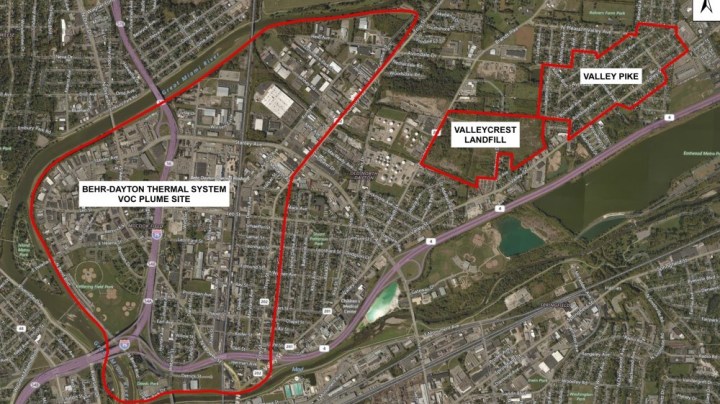
SITE MAP - APPROXIMATE BOUNDARIES
Adopting the Defendants’ view of Rule 23(c), “that predominance must first be satisfied for the entire cause of action[,] would undercut the purpose of Rule 23(c)(4) and nullify its intended benefits.”
Thirty property owners in Dayton filed a class action against the past owners of an air-conditioner factory, alleging the factory caused environmental contamination of the nearby property. The property owners claimed that volatile organic compounds had seeped into the groundwater underneath their property, creating a risk of vapor intrusion. That vapor intrusion, in turn, created a risk that the property owners will breathe in carcinogens.

The district court denied the motion for Rule 23(b) class certification of parties but granted the Plaintiffs’ alternative motion for Rule 23(c) class certification of issues. Defendants asked for an interlocutory appeal. The Sixth Circuit allowed the appeal and affirmed.

Defendants urged the Sixth Circuit to take a narrow reading of Rule 23(c). In Defendants’ view, because common issues of law and fact did not predominate over individual questions for each claim, class treatment of the remaining common issues was not appropriate. The Sixth Circuit rejected this argument and held that Rule 23(c) allowed class treatment of issues even when Rule 23(b) didn’t allow class treatment of parties.

The Sixth Circuit explained that “the broad approach respects each provision’s contribution to class determinations by maintaining Rule 23(b)(3)’s rigor without rendering Rule 23(c)(4) superfluous. . . . By contrast, the narrow view would virtually nullify Rule 23(c)(4).” Adopting the Defendants’ view of Rule 23(c), “that predominance must first be satisfied for the entire cause of action[,] would undercut the purpose of Rule 23(c)(4) and nullify its intended benefits.” The Sixth Circuit affirmed class treatment of the certified issues.

Read the Sixth Circuit’s opinion here.

The intervention waltz in federal environmental law

Ninth Cir. Pasadena
The Richard H. Chambers Courthouse, the Ninth Circuit’s home in Pasadena

Federal Rule of Civil Procedure 24(a)(1) allows “anyone to intervene [in a federal suit] who . . . is given an unconditional right to intervene by a federal statute . . . .” But many of the laws that give a private right to intervene limit that right. The Ninth Circuit recently issued an opinion that shows how the right to intervene plays out in a “host” of federal environmental laws with the same intervention rules.

In 2016, the federal government filed an enforcement action against Volkswagen under the Clean Air Act. The suit was based on Volkswagen’s acknowledgment that some Volkswagen cars had a defeat device that improved emissions test results and violated the Clean Air Act. Like many other federal environmental laws, the Clean Air Act has a three-part citizen-suit provision: Anyone can sue to enforce an emission standard, limitation, or other order under the CAA. But if the federal or a state government is “diligently prosecuting a civil action . . . to require compliance with [that] standard, limitation, or order,” a second, private suit is barred. Anyone who’s private suit is barred then has the right to intervene in the enforcement action under Rule 24(a)(1).

Ronald Fleshman, the owner of a 2012 Jetta, moved to intervene in the government’s enforcement action against Volkswagen. Fleshman claimed that Virginia’s state plan to implement EPA-set standards under the Clean Air Act required Volkswagen to buy back any car with a defeat device. And Fleshman argued that he had the right to intervene under the citizen-suit provision and Rule 24. The district court denied Fleshman’s motion to intervene and he appealed to the Ninth Circuit.

The Ninth Circuit affirmed, holding that Fleshman did not have a right to intervene under Rule 24. As the Ninth Circuit observed, the diligent prosecution bar only applies when the private suit is based on the same “standard, limitation, or order” as an enforcement action. Fleshman’s suit wasn’t barred because his claim was based on Virginia’s implementation plan, which was not part of the federal enforcement action. And under the three-part citizen-suit provision, “a citizen who retains the right to file suit on his own, despite a government enforcement action, has no statutory right to intervene in that action.” Because Fleshman still had a right to file his own suit, he did not have a right to intervene in the enforcement action.

Read the Ninth Circuit’s decision here.

What it says on the label: Appellate jurisdiction over (partial) final orders

Old Taylor Distillery
The Old Taylor Distillery in Frankfort, Kentucky

Federal Courts of Appeal only have jurisdiction to hear appeals from final decisions. And as the Sixth Circuit recently observed, a decision generally is final “only after the district court ends litigation on the merits, leaving nothing to do but execute the judgment.” But general rules have specific exceptions, and the Sixth Circuit illustrated one of those exceptions in an opinion worth reading for the bourbon backstory alone.

In 1887, Colonel Edmund Haynes Taylor, Jr. opened the Old Taylor distillery in Kentucky and began distilling bourbon. The distillery was the “most magnificent plant of its kind in Kentucky,” resembling “a medieval limestone castle, surrounded by pergolas, pools, turrets, and gardens . . . .” But after Taylor died, the distillery fell into disrepair, closing in 1974. The tradename “Old Taylor,” however, lived on after Sazerac Brands bought the rights and began marketing bourbon under that name.

Forty years after the Old Taylor Distillery closed, Will Arvin and Wesley Murray formed Peristyle, LLC, bought the distillery and started getting ready to make bourbon. They billed the site as “‘the Former Old Taylor Distillery’ or simply, ‘Old Taylor.’”

Sazerac sued for trademark infringement; Peristyle counterclaimed on other trademark claims. The Eastern District of Kentucky granted summary judgment to Peristyle on all of Sazerac’s claims—but did not rule on any of Peristyle’s counterclaims. Even so, both parties appealed.

The Sixth Circuit flagged this procedural history before holding that it had jurisdiction even though the District Court had not ruled on Peristyle’s counterclaims. The Rules Enabling Act allows the civil rules to define what judgments are “final,” and “Civil Rule 54(b) gives a district judge this option: ‘When an action presents more than one claim for relief . . .the court may direct entry of a final judgment as to one or more, but fewer than all, claims or parties . . . .’” The only limit is that the district court must “expressly determine[] that there is no just reason for delay.” And the district court did just that when it entered judgment for Peristyle. “We thus [the Sixth Circuit concluded] have appellate jurisdiction over the district court’s grant of summary judgment to Peristyle on all of Sazerac’s claims against it.” (The Sixth Circuit went on to uphold that judgment.)

Read the Sixth Circuit’s opinion here.